
Do not assume the HDMI port is an input
Read the laptop's port specifications before buying a cable. A port labeled HDMI out cannot accept the video output from another computer or console simply because the plugs fit.
Decide what you want to show. Extending a desktop, viewing a console and remotely controlling another computer are different tasks. A solution for one may add too much delay or require permissions that make it unsuitable for another.
Write down both devices, their operating systems and the desired result. That makes compatibility checks more useful than searching for a generic adapter.
Check Windows wireless projection support
Microsoft's projection instructions describe installing the Wireless Display optional feature on a supported receiving PC and configuring Projecting to this PC.
Open the receiving app as directed, then use Windows key + K on the sending PC to select the wireless display. Both devices need compatible wireless-display support. If the receiving settings report that projection is unsupported, a cable does not supply the missing feature.
On a managed work or school computer, optional features and projection may be controlled by an administrator. Ask for the supported arrangement rather than trying to bypass those controls.
Arrange the desktop after connecting
Choose whether to duplicate the desktop or extend it using the available display controls. With extension, arrange the screens to match their physical positions so the pointer moves in a predictable direction.
Check text size, resolution and orientation. Drag a normal work window onto the second display and assess whether it is readable from your seat. A successful connection can still be uncomfortable if the laptop sits too low or far away.
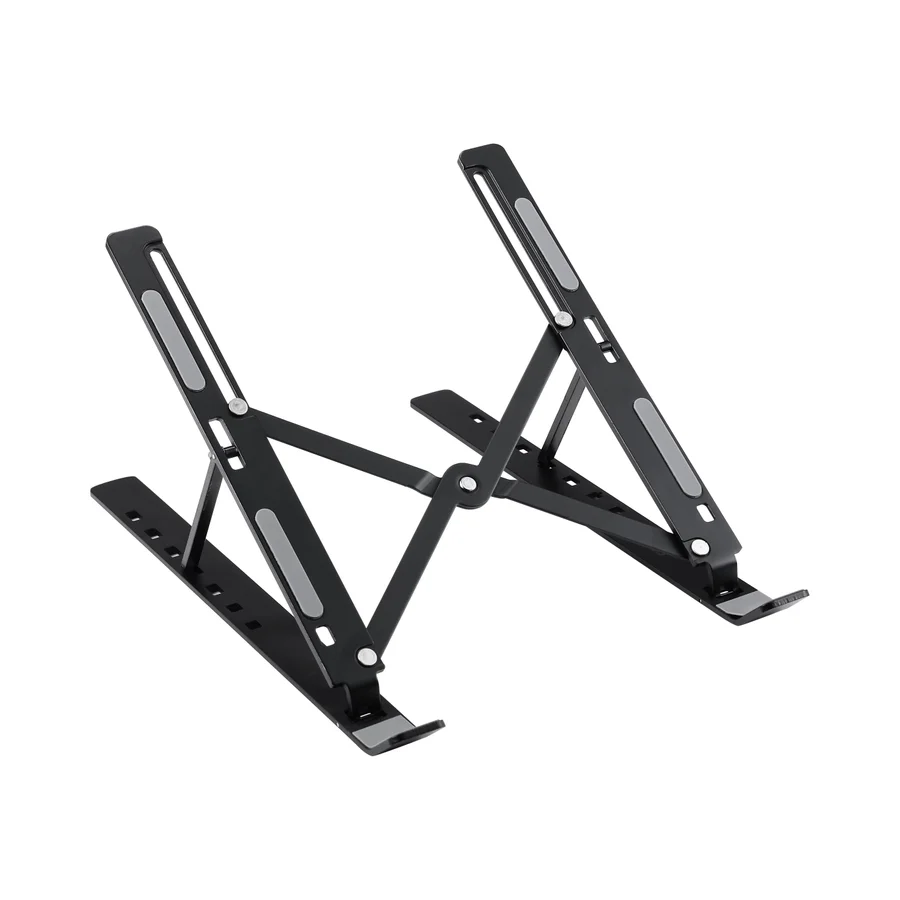
Our laptop-stand comparison helps assess positioning options. Keep cooling openings clear and support the device as its manufacturer directs.
Understand the alternatives and their tradeoffs
A compatible capture device can take an external video signal and display it in software on a laptop. That is a capture-and-preview workflow, not a conversion of the laptop's HDMI output into an input. Check supported signals, software and latency before buying.
Remote desktop software provides access to another computer and may behave differently from an extended local display. Use it only with authorization and appropriate account protection.
If you mainly need reliable low-latency display, compare a dedicated monitor with the additional equipment and setup required to reuse the laptop.
Test your actual task before committing
Try the applications, video or presentation you intend to use. Check pointer response, audio routing and reconnection after sleep. Wireless projection may be acceptable for a reference document while feeling sluggish for a different task.
Disconnect deliberately and restore any receiving settings you enabled only for testing. For sharing a phone instead, use our separate phone-to-TV guide, since those devices may use a different connection system.
Name the source and receiving screen
Before buying an adapter, write down the device producing the picture and the laptop you want to display it on. A Windows desktop feeding another Windows PC, a game console feeding a laptop, and a Mac extending to an iPad use different methods. Look up the laptop’s actual video ports in its specification sheet. Most laptop HDMI sockets are outputs, so a normal HDMI cable between two computers will not make one act as a monitor. A USB capture device may display a console’s output in software, but it introduces delay and is not the same as a direct monitor input. Choose the method by purpose.
Set up Windows wireless projection
Microsoft’s projection instructions describe installing the Wireless Display optional feature on the receiving Windows PC, then opening its Wireless Display app. On the sending PC, use the supported cast control, including Windows key plus K, to select the receiver. Both machines must support the needed wireless-display features. If the receiver says that projection is unavailable, consult the hardware maker’s support information rather than assuming an extra HDMI cable will fix it. On managed work devices, an administrator may control the feature and network access.
Choose duplicate or extend deliberately
Duplicating shows the same desktop in two places; extending gives each screen its own workspace. After connecting, open the display settings on the source computer and arrange the screen rectangles to match their physical positions. This makes pointer movement and window placement predictable. Check text scaling and resolution on the receiving laptop. Wireless projection may have visible delay, so it may suit documents and reference material better than competitive gaming or precise color work. If audio should play through a particular device, check the output selection separately. A picture appearing on the second screen does not guarantee that sound follows it.
Treat a capture device as a separate tool
A compatible USB capture device can take HDMI output from another device and show it in a viewing application on the laptop. Check the source’s output format, the capture device’s supported resolution and frame rate, the USB port and the viewing software. Some protected video content may refuse capture. Preview delay can make a capture window unsuitable for fast games even if recording works. Use the capture maker’s official setup instructions and avoid plugging two outputs together. If low latency is essential, a dedicated display with an input designed for the source is usually the clearer choice.
Consider remote desktop for computer work
If the goal is to control a second computer’s applications rather than merely show its pixels, a supported remote-desktop tool may fit better. This sends an interactive session over a network rather than turning the laptop screen into a physical video input. Check the operating systems, account permissions and network requirements. Use a secure, vendor-supported method and do not expose a computer directly to the public internet simply to make remote access work. Display resolution and responsiveness depend on the connection. A remote session can be excellent for administration or documents, while a direct monitor remains preferable for high-frame-rate video.
Check platform-specific alternatives
Apple’s Sidecar guidance explains a supported way to use an iPad as a second display for a Mac; it does not turn every MacBook into a general HDMI monitor. Some device ecosystems offer their own wireless-display or tablet features. Verify compatible models, software versions and account requirements on the maker’s site before buying hardware. Avoid interpreting a product’s “screen sharing” label as proof it can accept any console or PC. The source and receiver must both support the same connection path. Note whether the arrangement works when internet access is unavailable if that matters to your use.
Troubleshoot the connection in order
Start by confirming power, network and the receiving app, then check that the source can discover the receiver. Restart the supported feature on both devices and install official updates. Microsoft’s display troubleshooting guide covers the standard external-monitor path; wireless projection has its own compatibility requirements. Try a simple duplicate session before arranging an extended desktop. If a capture device shows a black image, verify the source output and supported format rather than guessing that the laptop’s HDMI port is an input. Keep the exact model numbers and error message handy for vendor support.
This article draws on the linked primary sources and practical explanations. It does not report hands-on testing or a personalized assessment.